Why Permanent Brows Turn Red or Gray, and How to Avoid It
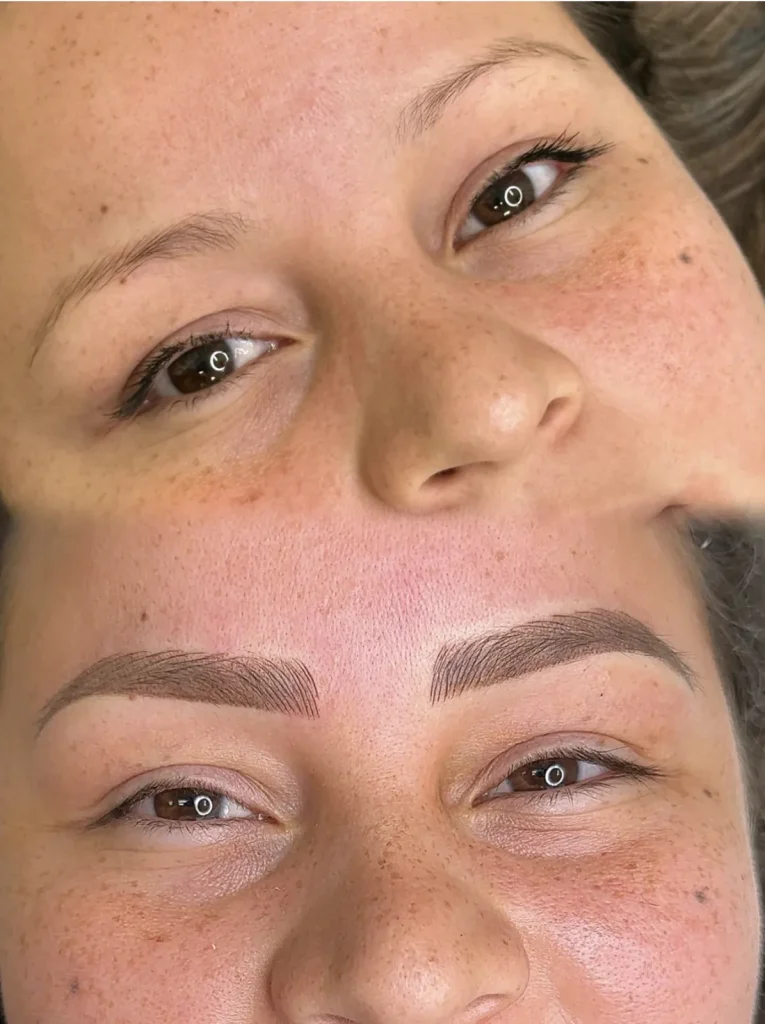
If you have ever seen permanent brows that looked warm orange, cool gray or even slightly green, you probably wondered what went wrong. Was it the artist’s hand? The needle? Bad luck? In my experience the answer is usually none of those. The answer is color.
I have done this work for five years and have worked with about 1,200 clients. A good share of the people who sit in my chair are not first timers. Some of them arrive with brows from another studio that changed color, and they are often nervous and a little embarrassed about it. So let me explain what actually happens, in plain language, so you can protect yourself before you book anywhere.
Permanent makeup does not stay the color it was on day one
The first thing to understand is that pigment placed in the skin is not like paint on a wall. Your skin is alive. It heals, it renews itself and it reacts to what is placed in it. The color you see right after your appointment is not the color you will live with. It usually looks stronger at first and softens as you heal, and over the following months and years it keeps changing slowly.
That slow change is normal and expected. It is also the reason color choice matters so much. When a pigment fades, the color you see is whatever is left behind. If the pigment was chosen well for your skin, what remains is a soft, natural version of your brow. If it was not, what remains can drift toward red, gray or another tone you never asked for.
The real cause: the pigment was not chosen for your skin
Most artists buy their browns already mixed. The bottle says something like brown or chestnut, and that is what goes into the skin. The problem is that a mixed pigment is made of several components, and different skin holds those components in different ways. As the pigment fades, one component can stay visible longer than the others. When the wrong undertone surfaces, your brows start to look red, gray or green.
That is not the technique failing. It is a color that was never chosen for that skin. It also explains something clients often find confusing: two people can receive the same pigment in the same studio and heal completely differently.
Why I mix every color myself
I build each color from primary pigments, after reading your skin’s undertone. Your undertone decides which tones will look natural on you and which ones will turn against you as the color fades. It takes me more time than opening a premixed bottle. It is also the main reason my work tends to fade into something softer instead of something you did not ask for.
I am not saying that every premixed pigment will fail. I am saying that when an artist cannot see what is inside the mix, the final color depends more on luck than on decisions. I prefer to make the decision myself, for your face.
Other things that influence how your brows heal
Color choice is the biggest factor, but it is not the only one. A few other things play a part, and all of them are worth knowing about.
- Your skin type. Oily skin does not hold hair strokes well. The strokes blur and soften as they heal, and within a year they can read as a smudge instead of hairs. If your forehead runs oily, powder brows are usually the better technique for you.
- Earlier work under the new color. If you already have permanent makeup, the old pigment affects what a new layer will look like. Work that is only slightly dark can be covered with powder brows. If the old work healed very dark, I will tell you honestly that laser removal has to come first.
- How you care for your brows while they heal. Good aftercare helps the pigment settle well. That is why every client leaves with an aftercare kit, and why I message everyone one week later to ask how healing is going.
- The technique you choose. Microblading, powder brows and combination brows behave differently, and they last differently. Microblading lasts about a year. Powder brows last one to two years. Combination brows last about twelve to eighteen months.
What to ask before you book a permanent makeup artist
When you compare studios, price and photos matter, but they do not tell you everything. These questions will tell you much more:
- How do you choose my color? A good artist can explain this clearly and will mention your skin tone and undertone.
- Do you mix the color yourself, or do you use it premixed? Either answer is useful information. What matters is that the artist knows what is in it.
- Can I see healed results, not only fresh photos? Fresh work always looks sharp. Healed work shows you what the color becomes.
- Is there a free consultation? You should be able to ask questions and see the design before anything happens.
- Do I approve the design before you begin? You should, every time.
If an artist cannot answer the first question, take that as a sign to keep looking. The answer tells you a lot.
What if your brows have already changed color?
First, do not panic, and do not start covering them with heavy makeup out of frustration. Book a consultation so someone with experience can look at them in person. Photos rarely show the real tone.
Depending on what I see, there are a few possible paths. Some brows can be corrected with a new design. Powder brows are the option that can cover older work, as long as that work did not heal too dark. If it did, laser removal is the first step, and I would rather tell you that than build on top of something that will not work. I once worked with a client who had lived for years with very dark, thick brows from earlier work. She went through laser removal first and then came to me, very nervous. The result was what she had been hoping for. That kind of outcome is possible, but it takes patience.
A short checklist
- Expect your color to soften after the first days. That is normal.
- Choose an artist who can explain how your color is chosen.
- Ask for healed photos.
- Match the technique to your skin type, especially if your skin is oily.
- Follow the aftercare instructions carefully.
- If you already have brows you do not like, get a consultation before doing anything else.
Not sure where to start?
Come in for a free consultation. It takes about half an hour, and you are not committing to anything. I will look at your skin, talk through your goals and tell you honestly which technique I would choose for you. You can read more about each option here: microblading, powder brows and combination brows. If you are still comparing techniques, this guide may also help: Microblading, Powder Brows or Combination Brows? How to Choose.
Aftercare tips and new services, once a month
No more than one email a month, and you can unsubscribe any time.